
We find ourselves in a unique situation and company’s have a decision to make. Do we hire a data scientist now or do we hire a data scientist later? We now have access to more information and it’s growing at an exponential rate. Without getting into the numbers and size of growth, what we must now consider is what to do with all of the information. How can we leverage it to better serve our customers and maintain a competitive edge. How do we turn the billions of lines of information into meaningful information and insights? Enter the Data Scientist – the newest profession that companies can’t seem to get enough of. But why?
More Science!
So if all we really need is a person who can understand mathematical equations and the statistical probability of numbers, why not just hire a mathematician or statistician? Because even though having one on the team would be nice (like, really nice) unless you’re in financials or a fortune 500 company, you don’t need a mathematician to crunch the numbers because analysts leverage their understanding of programming language, machine learning platforms, and business intelligence reporting that do not facilitate the need for an on call math professor.
Big data is mostly about taking numbers and using those numbers to make predictions about the future. The bigger the data set you have, the more accurate the predictions about the future will be.
Anthony Goldbloom – Founder & CEO of Kaggle
With Machine Learning data scientists and management alike can ask questions about their business, their customers, how to find new customers, and even what shade of red will be most popular for the upcoming Christmas season. With enough data you can make predictions about nearly anything but the reason data scientists are in high demand is because many companies don’t know what kinds of questions to ask. Business Analytics is a means of understanding which questions to ask and which predictions to act on.
So if you’re wondering if hiring a data science worth it because you, already have people that download data and put it into excel and tell you stuff? The question you should ask is, can your current team sift through terabytes of data at lightning speeds, make predictions and then take those predictions to the appropriate department to capitalize in the insights – all in a days work? If the answer is yes, then your team figured it out and that’s awesome. If the answer is no, then you should definitely consider hiring a data scientist. Even if not full time you should consider hiring a free lancer. Now to visualizations and management reporting (the creative part of creative ingenuity).
Creative Ingenuity!
Creative ingenuity is a term that essentially captures a function from a person or team that combines creativity and ingenuity (I know, ground breaking stuff here). Not just knowing what questions to ask, not just having the data and being able to download it, not just being able to train a predictive model and then interpret the numbers – Everything. A data scientist can do everything, from start to finish. This is why Data Science, and this is why the profession continues to grow and smart owners are excited to hire them.
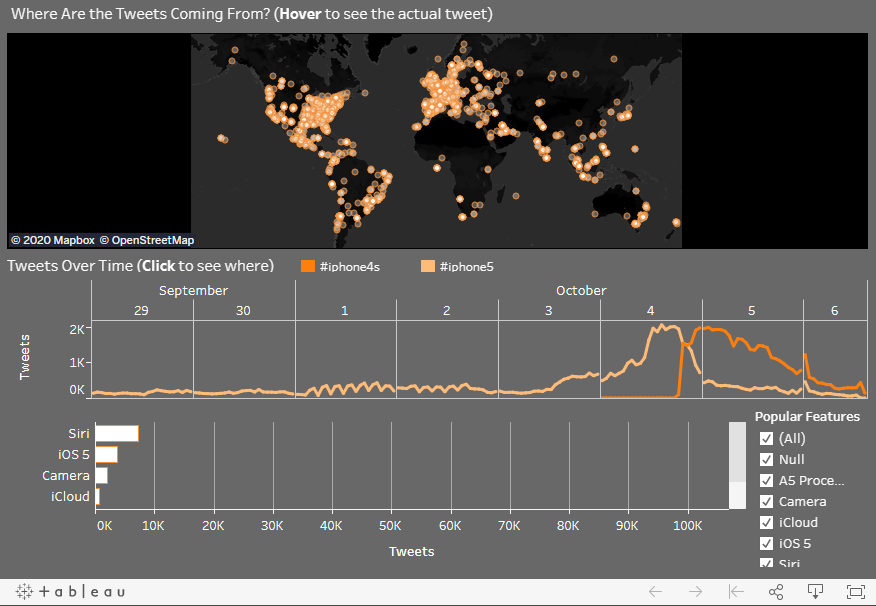
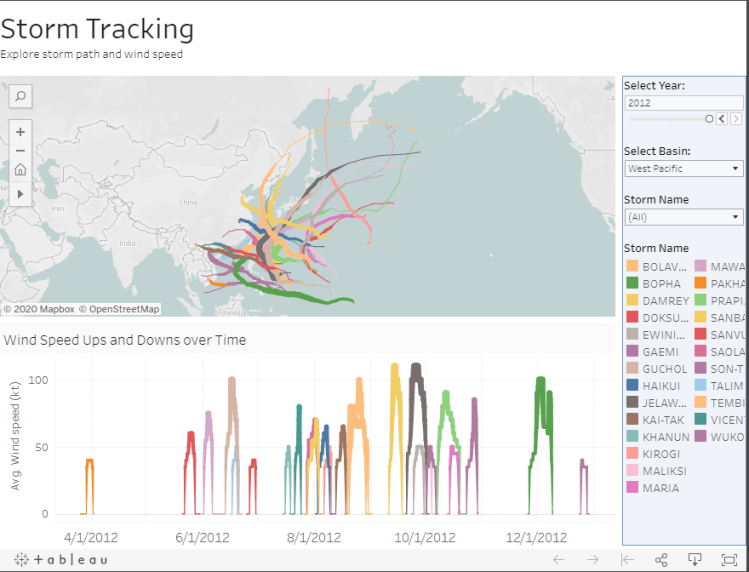
Using products like Tableau (pictures above courtesy https://www.tableau.com/solutions/gallery) and Power BI, data analysts are able to show dashboard reports that allow for each viewer to change the filters making the data relevant to them and their department. Creative ingenuity is a new way of saying that we want a member of the team who has the quality or ability to create or invent something along with the ability to solve difficult problems in original, clever, and inventive ways.
 Leaders Check