
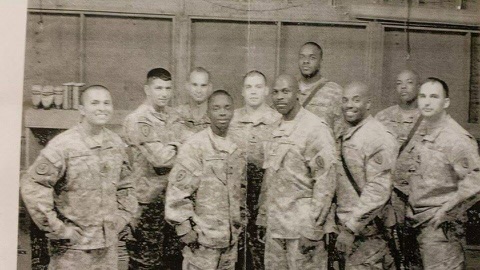
I remember sitting in my office as I started the retirement process. I had taken out a blank piece of paper and started to plan the next chapter of my life.
No PCS orders.
No mandated timeline.
No new duty station.
Just a pen, a quiet house, and a question I wasn’t prepared to answer:
What am I actually supposed to do now?
On paper, things looked fine. I had experience. Education. Leadership credentials. A résumé that checked the right boxes. But internally, something felt off. The structure that had shaped my identity for decades was gone, and with it went the clarity I didn’t even realize I depended on.
The hardest part of transition wasn’t the job search.
It wasn’t the résumé.
It wasn’t learning how to explain my military experience to civilians.
The hardest part was figuring out who I was without the uniform.
The Questions That Don’t Show Up on a Checklist
When people talk about transition, they usually focus on logistics:
- What industry are you going into?
- Where are you moving?
- How much money do you need to make?
- What certifications should you get?
Those are important questions—but they aren’t the first ones that need answering.
The questions that quietly shape everything else tend to sound more like this:
- What actually gives my life meaning now?
- What am I carrying from my last chapter that I haven’t dealt with?
- What am I afraid of losing?
- What am I afraid of becoming?
- What parts of my identity were assigned… and which ones were chosen?
Most of us don’t stop long enough to ask those questions. We move fast. We fill the silence. We replace one structure with another and call it progress.
I did that too.
When Movement Becomes Avoidance
In hindsight, I can see that some of my early post-Army decisions were less about calling and more about comfort. Familiar rhythms. Familiar pressure. Familiar validation.
Busyness can feel like purpose if you don’t slow down long enough to tell the difference.
Scripture talks about this kind of striving plainly:
“Man shall not live by bread alone, but by every word that comes from the mouth of God.”
— Matthew 4:4 (ESV)
I had bread.
I had opportunity.
What I didn’t have—at least not yet—was clarity.
Why Most Transitions Stall
Here’s what I’ve learned after walking this road and now walking alongside others who are on it:
Most transitions don’t fail because of a lack of options.
They stall because of a lack of self-awareness.
We try to make forward decisions without first taking inventory of what’s unresolved, what’s driving us, and what actually matters now.
That’s not a career problem.
That’s a leadership problem.
Slowing Down Enough to See Clearly
Eventually, I had to stop asking, “What can I do?”
And start asking, “Who am I becoming?”
That shift changed everything.
It also revealed something uncomfortable: clarity doesn’t come from answers first—it comes from better questions.
Questions that force honesty.
Questions that surface fear, values, wounds, faith, and hope.
Questions that don’t rush you into a role before you understand the cost.
A Tool I Wish I’d Had Earlier
That realization is what led me to create a short Transition Clarity Assessment—not as a career guide, but as a self-leadership tool.
It’s designed to help you slow down long enough to ask the questions that actually shape your next chapter, including:
- What are you trying to outrun?
- What are you still carrying?
- Where is your sense of worth coming from now?
- What does “success” mean without rank, title, or uniform?
- What does faith look like in this season—not theoretically, but practically?
This isn’t about finding the perfect answer.
It’s about becoming honest enough to move forward with intention.
If You’re in the Middle of Transition
If you’re Active Duty, Guard, Reserve, retired, or simply stepping out of a government role into something new—this season matters more than most people admit.
Don’t waste it by rushing through it.
“Teach us to number our days that we may gain a heart of wisdom.”
— Psalm 90:12 (ESV)
Wisdom doesn’t come from speed.
It comes from attention.
If this resonates, I’ve put together a free, short e-book and assessment guide you can download. Use it on your own, with your spouse, or as a conversation starter with a mentor.
No hype.
No formulas.
Just space to think clearly again.
Sometimes the most important step forward…
is stopping long enough to ask the right questions.
 Leaders Check